
Practical resources for leaders managing workplace conflict, people issues, and psychosocial risk
These articles are designed for leaders and small to medium organisations dealing with workplace conflict, psychosocial risk, difficult conversations, team strain, and other people issues that can affect safety, leadership, and day to day operations.
When Does Workplace Conflict Become a Psychosocial Risk?
Workplace conflict and psychosocial risk are closely linked when conflict becomes frequent, prolonged, severe or unresolved. This article explains when workplace conflict may become a psychosocial hazard, the warning signs employers should watch for, and how to choose a proportionate response, including when mediation, investigation or management intervention may be appropriate.
“I Want You to Know, but I Don’t Want You to Do Anything”
When an employee raises a psychosocial concern but asks the organisation not to act, leaders must balance confidentiality, employee trust and workplace safety obligations. This article explains how to assess the risk, avoid unnecessary escalation and choose a proportionate, procedurally fair response that protects people and supports defensible organisational decision-making.
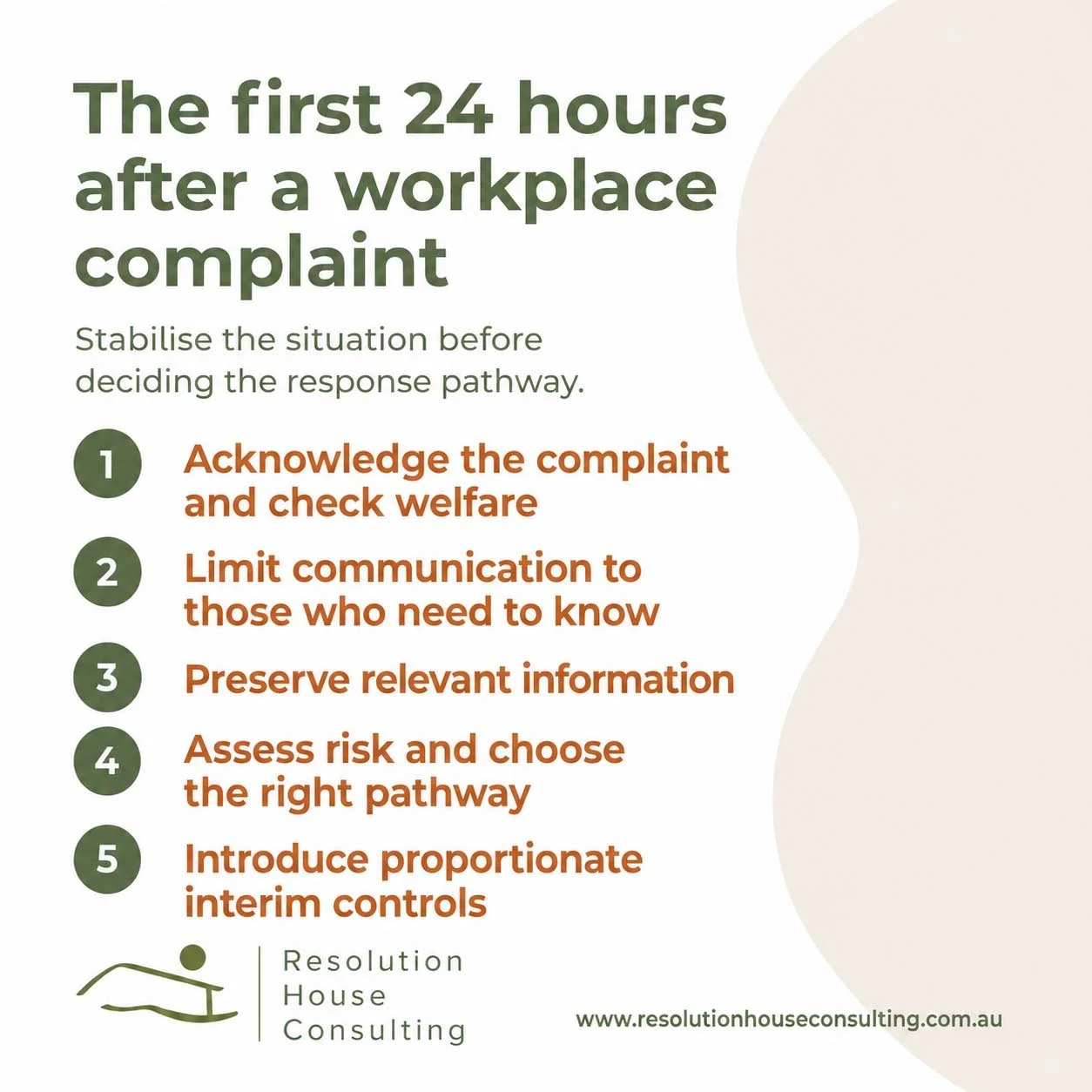
What Should an Employer Do in the First 24 Hours After Receiving a Workplace Complaint?
When an employee raises a workplace complaint, acting quickly is not the same as acting impulsively. The first 24 hours should focus on protecting wellbeing, managing immediate risks, preserving relevant information and determining the most appropriate response pathway.
When Your Best Employee Becomes Your Most Struggling Manager
Some of the most entrenched workplace conflicts begin long before a complaint is lodged. They begin with a promotion. Discover the hidden leadership risk many organisations overlook.
Before It Becomes a Complaint: The Missing Middle in Workplace Conflict
Most workplace conflict does not begin with a formal complaint. It starts earlier — with silence, tension, avoidance, sick leave or a resignation that does not quite make sense. Early intervention helps leaders act before issues become formal, entrenched or psychologically harmful.
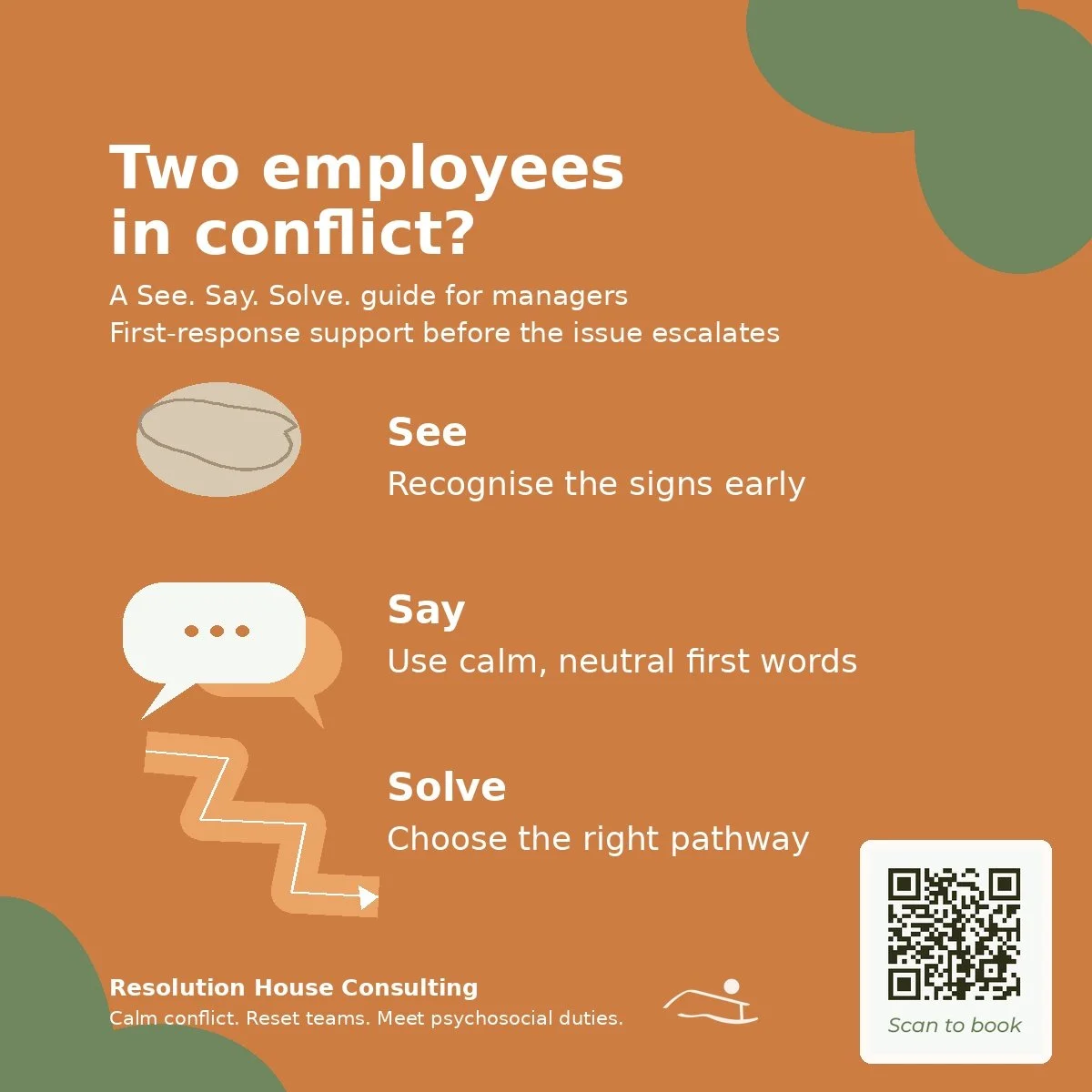
What Should I Do When Two Employees Are in Conflict?
When two employees are in conflict, the first response matters. This practical See. Say. Solve. guide helps managers recognise what is happening, use calm first words, and choose the right pathway before the issue escalates.
When a People Issue Becomes a Business Risk
The first difficult interaction is not usually what damages a business. The weeks or months that follow are. This article looks at how ordinary workplace tension turns into operational risk when it is left to run, the specific warning signs that mean a matter is no longer minor, and the point at which a proportionate early response is still possible before the situation starts making decisions for you.
Psychosocial Hazards at Work: The Leadership Trap Many Managers Walk Into
Psychosocial risk rarely presents as an obvious hazard. It usually shows up as tension, withdrawal, or a complaint no one saw coming. A practical look at why leadership response is now the deciding factor, and what managers in small to medium organisations can actually do to respond earlier and more effectively.